
Notes for Azed 2,774
There are usually one or two points of interest in an Azed puzzle, and here we pick them out for comment. Please feel free to add your own questions or observations on any aspect of the puzzle (including clues not listed below) either by using the comment form at the bottom of the page or, if would prefer that your question/comment is not publicly visible, by email.
Azed 2,774 Plain
Difficulty rating:  (2.5 / 5)
This puzzle can be found at https://cdn.slowdownwiseup.co.uk/media/documents/obs.AZED.20251221.pdf.
After 53 consecutive Christmas Specials, our festive ‘treat’ from Azed is rather plain fare, and a bit of a “curate’s crossword”, with one or two neat clues and a couple of howlers, including the faulty anagram at 18a (surely someone is checking these puzzles?). I briefly entertained hopes that BALTHAZAR/BALTHASAR might be the king emerging at 1a, but I was to be disappointed. It would have been so easy to at least include a ‘Christmassy’ word for the competition – by replacing the entry at 7d with TURBOCAR and changing six other entries in the NE corner, I was able to make the entry at 17a NOEL, a word that has never been used for the comp.
For anyone who feels that after polishing this one off they’ve got room for a little something more, I have uploaded a copy of Azed 249, the Christmas Special from 1976 (“Double or Quits”) for dessert, to be taken with cream, custard or brandy butter according to taste (cream for me, please). I will add the solution at the end of the week (I’m happy to provide hints here if they are required).
May I take this opportunity to wish all readers a very happy Christmas indeed.
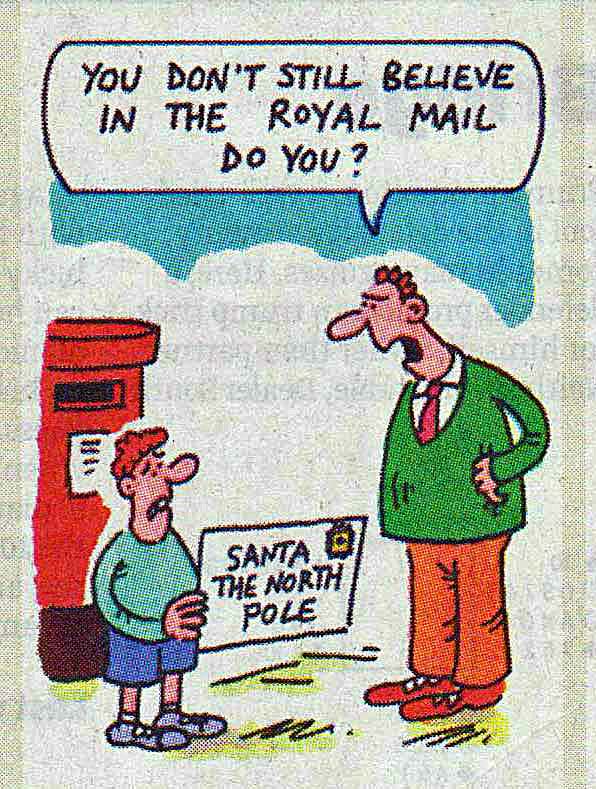
Clue Writers’ Corner: Even when the Christmas competition has not featured a festive word or phrase, I have tried to make my clue ‘seasonal’, but have then found myself in a minority of one, at least as far as the published clues were concerned. So I think it’s fair to say that an excellent non-festive clue is pretty sure to beat a less impressive clue that features Santa, the Grinch and three wise men. It is more important, I’d suggest, to focus on the judging process. Azed used to be looking at clues one at a time as they came out of envelopes, and probably giving most of them a fair amount of consideration; now he is presented with a single list of 100+ clues on a couple of sheets of paper. Your clue needs to catch his eye – the first ones that he picks out as being interesting are likely to remain on his shortlist, and while they may be overtaken by others, they are unlikely to be ousted (unless they are seriously flawed); less striking clues of broadly similar merit, however, may struggle to make the cut.
You might ask yourself whether, since the competition word is shown by Chambers as ‘historical’, there is a need for definitions in submitted clues to indicate this, particularly given that Azed has felt the need to qualify his definition of just such a word at 30a. In the Slip for 1,406 (CHASSEPOT), Azed helpfully wrote, “It’s one of those words that some dictionaries label ‘(hist)’ because although the word itself is not archaic it refers to an outdated object. This clearly left some clue-writers uncertain how or whether to indicate the historical nature of the word. In such cases I normally incline towards clues which attempt some indication of the fact that the article or word in question is not in current use.” That said, PALESTRA (1,733) is shown as ‘ancient hist‘, but a look at the published clues will reveal that a number of them suggest that the thing (not the word) existed in the past, but several clearly give no such indication. My advice would be to avoid if possible intimating that the title in question still exists, which might just mean using a past tense, as in ‘he farmed’ rather than ‘he farms’ for GEBUR (a tenant-farmer, historical).
Across
10a Dyers’ wood, name by law including a T (10)
A four-letter word meaning ‘[to] name’ is followed by a four-letter Latin word meaning ‘by law’ containing (‘including’) the letters A and T (from the clue). But the answer isn’t the name of a type of wood, it’s a term which can be used to qualify the word ‘wood’; it is no more ‘wood’ than SPROUTING is ‘broccoli’ or AFGHAN is ‘hound’.
17a Cold accommodation in zenana coming to an end? (4)
The usual abbreviation for ‘cold’ is followed by the three-letter word for a room in a harem (‘zenana’), the result being a term for a passage rounding off a piece of music.
18a Something to scare the kids we heard shivering (7)
An intended anagram (‘shivering’) of WE HEARD, and the easiest mistake for a setter to make, where the fodder contains two of one vowel and one of another, while the answer contains one of the former and two of the latter. The clue bears a considerable similarity to “Like shallow waters? Try swimming in Crete (7)” for NERITIC in 2,279.
24a A couple of buddies, ‘handy’ as one might imagine (7)
A three-letter ‘buddy’ is followed by a four-letter one, producing a word which might whimsically (hence the ‘as one might imagine’) be thought of as meaning ‘handy’
26a Lacking pressure, skins piglets (4)
A five-letter word for ‘skins’ (complete with fur) is deprived of the usual abbreviation for ‘pressure’ (‘lacking pressure’).
30a Old woman’s gown, cover for the head pair of characters exchanged (6)
A six-letter cover for the head has its first and third letters swapped (‘pair of characters exchanged’) to produce the answer, a type of loose-fitting gown. The answer is shown by Chambers as ‘historical’, indicated by the ‘old’ that qualifies the definition.
32a Foreign tongue – one included in what goes with memento (5)
A single-letter word for ‘one’ is contained by ‘included in’ a four-letter Latin verb which follows ‘memento’ in a well-known phrase literally meaning ‘remember to die’, which given the result of the third test, I’m sure many Oztraylians will, with considerable fondness (not to mention the four dies that preceded it).
Down
3d Case for alcohol (not wallop!)? It’s partly fortifying (5)
An eight-letter word for a case in which two, three or four decanters are on view but are secured by a central locking system (a great way to annoy your servants whilst showing off your expensive crystal to guests) is shorn of a three-letter word meaning ‘[to] wallop’ or ‘beat’. The answer is a word for a slope, in fortification specifically “the sloping side of a wall or earthwork, which gradually increases in thickness from above downwards.”
5d Substance in limestone possibly coagulates as deposits? (12, 2 words)
A four-letter word for ‘substance’ (or an informal term for a pound sterling) is contained by a four-letter word for a blue limestone rock occurring in SW England, the Chambers entry for which gives only the meaning ‘Lower Jurassic’, but the attached etymology confirms the association. The combination is followed by a four-letter word meaning ‘coagulates’, leading to a (6,6) answer which is defined by example, suggested by the question mark (not all of such things are deposits).
6d Rye-grass in patch the French reared (6)
A four-letter word meaning ‘[to] patch’, as one might a sock, precedes a reversal (‘reared’) of the masculine French word for ‘the’.
8d In ornamental lacework young girl we hear abandoned? One of seven possibly (5)
I’d like to think that Azed didn’t write this clue, which requires that a non-word homophone (‘we hear’) of an old informal term for a lively young girl be removed from a nine-letter word meaning ‘[decked] in ornamental lacework’; there’s an ‘invisicomma’ between ‘lacework’ and ‘young’. The most relevant of the ‘seven’ at this time of year is probably gluttony, closely followed (often within minutes) by sloth.
9d Feature of thoroughfare, especially for Italy (5)
A nice clue, albeit better not subjected to close scrutiny. A three-letter Latin (and modern Italian) word for a road or thoroughfare has the IVR code for Italy replaced by the three-letter abbreviation for ‘especially’ (‘especially for Italy’). The outcome is the name of an Italian brand which will celebrate its 80th birthday next year, with examples of the various ranges being frequently seen on Italian streets. A 1960s Mod favourite, in the film Quadrophenia, Ace Face (Sting) was frequently seen astride one, and Billy Idol rode a GS model on stage during the Who’s 1996 Quadrophenia tour.
11d One who penned songs endlessly in Everglades maybe (5)
The surname of the lyricist whom you might remember from such films as My Fair Lady and Gigi loses its last letter, yielding the name not of any old swamp but one near Argos which the Hydra called home. Unless the Everglades plays host to a many-headed creature with poisonous breath (no, he doesn’t live there), the definition by example makes little sense.
20d I’ll follow deviation, first to last, in France being foolish (7)
A six-letter word for a deviation, of the sort that one might take to avoid traffic jams, has its first letter moved to the end (‘first to last’) before having the letter I (from the clue) tacked on the end.
23d Whitefish in savoury dish replacing centre of skillet? (6)
The central letter of a common three-letter word answering to ‘skillet?’ is replaced by a word for a savoury medley, derived from the Latin word for a pot.
27d Chubby still? Pet lost outside, somewhat thickset (5)
A (5,3) phrase for ‘chubby still’ has the letters PET removed (‘lost’) from the outside.
(definitions are underlined)

Re: the Double or Quits AZED 249, mentioned above, and which I managed to finish, could you please explain 25D where
“Bars aplenty: elliptical result of ridings” apparently leads to GRIDS ? I can see the letters all come from the word “ridings”, but how to derive the solution from that defeats me.
That one’s got ‘Azed’ written all over it! If you put RID IN GS, then you get GRIDS (the ‘bars aplenty’). He’s tried hard to suggest something a bit unusual through the ‘elliptical result’ bit, though a bit of “setter’s licence” needs to be granted.
Many thanks for this – I shall sleep easier now!
Thanks Doc, Appreciate your help and love the site! I’ll try submitting online tonight, giving me time for a postal entry if something goes wrong. I’ll take your advice and specify my italics in the explanation box. Whenever I used italics in past postal entries, I would try to do them by hand and also mention it in the explanation.
Hi Doc, Is the closing date for entries to the current ‘Christmas’ Azed competition tomorrow, Sat 27th Dec? I can’t see it mentioned online.(I was expecting an extra week). Also, I’d be grateful if anyone could confirm for me how to indicate italicisation of words in a clue in the online box? Google AI says, with underscores _like this_ or with asterisks *like this* but I don’t trust it! Should I just write the clue without the italics and specify them in the explanation box?
Hi Alex
These are good questions! In the past, the closing date for the Christmas comp has been extended by a week. However, this puzzle was not a ‘special’, and the online entry (not previously an option for UK entrants) means that competitors are no longer at the mercy of the postal service (we are now at the mercy of the online submission mechanism). The printed and online versions of the puzzle have the same closing date, and I can find no suggestion on the web that the date has been changed; given the emphasis on online entry, it would surely have been very easy to communicate such a change. I would recommend working on the basis that online entries need to be submitted by the end of Saturday 27th.
I have tried cutting and pasting italicised text into the boxes, but all the formatting is removed. The only way that I have managed to get italics into the box at all is by going into the browser’s Developer Tools and actually changing the ‘font-style’, but that sets the style for the whole field and doesn’t help much! Unless any readers can identify a reliable way to do it, I would say that including ‘coded’ formatting inside the clue itself was high risk – my preference would definitely be to include a clear note either at the end of the clue itself, eg “You’ll see this king… [the word ‘this’ is italicised]”, or to include something similar in the explanation box, eg “Anagram of FLAT TYRES WOW; the word ‘this’ is italicized”.
I’m afraid that’s the best I can offer!
I have had a problem with submitting my entry this week. When I got to “submit”, the grid offered was the usual Gemelo one, with my name filled in under the “Clue” box, and my email address in the “Explanation” box. I deleted these and filled in my clue, but there was not room in the explanation box for my explanation in full. I have also not received my normal acknowledgement from the Observer. Has anyone else encountered this problem?
Also, my wife , who won a third prize in Gemelo a few weeks back, had her name repeated in the newsletter as a third place in Azed a week later – which was not the case!
My experience was very similar. Having decided that I’d submit an entry as long as I could do it online, I cleared all cookies from the Observer and went to the Azed page. It asked me to log in, so I put in my ‘free registration’ details and was duly presented with the interactive puzzle. Having filled in the blanks, I submitted the puzzle. Like you, I then got the ‘Clue’/’Explanation’/’Message for Azed’ boxes, the first two being prepopulated with my name and email address. I replaced these with my clue and explanation, and submitted the form. I similarly received no email confirmation.
However… If I now delete all Observer cookies from my browser and go back to Azed 2,774, I am (as I would expect) asked to log in; once I have done so, the grid is immediately reloaded with my answers. This indicates that the data is associated with my server account, rather than being held in cookies on my PC, so the Observer’s system knows my name and email address without me having to enter them on the form, and should be able to associate them with my submission. If I go into ‘Result’ I can also see my clue/explanation, which supports this line of thinking. The ‘Clue entry’ pop-up is now an integrated part of the system (they are no longer using Google Forms), so I would not expect a confirmatory email. In theory, all should be well… 😉
Has anyone had a different experience?
Thank you – except that autocomplete is not eliminated by clearing the Observer cookies, so I shall also submit a dinosaur postal entry !
I can’t say that I blame you!
My confidence in the electronic submission process is inversely proportional to the quality of my clue, and is therefore very high.
My experience with submitting this one is the same. I’ve also noticed that after the very first submission under the new owners, my address hasn’t been requested which they’d need to identify that I’m not a UK solver, The pdf for this one says that non-UK entries may be recognised as Highly Commended (HC) which I think contradicts their Ts&Cs elsewhere (I now can’t see these as I hit the “subscribe” popup). I suspect my days doing this are numbered in the longer term as I can’t justify 14 pounds/month for 1 competition entry where I may get an HC at best. It was good while it lasted.
Hi Tim
I think the ‘HC ceiling’ for overseas entrants is specific to the Christmas puzzle, because VHC entries qualify for additional prizes. For all other comps, it is only the podium which is off limits.
At the moment my ‘free’ registration seems to be allowing me to complete and submit Azed/Gemelo puzzles online, but if that changes I shall go back to what I was doing before the online submission was introduced, ie solving the puzzles but not (in general) entering the comps.
When I switched from 60 years of just solving to also setting, a friend suggested I should try the Azed clue-setting competition as a help in improving my own clueing, but I gave up after a few months. Azed seems to like such convoluted clues that they would never pass the Listener editors, whose emphasis on concision seems to me a much better test of a good clue. I have enjoyed the part-passing of the guard to Gemelo (Twin), particularly as he doesn’t rely so much as Azed on anagrams. However, Azed’s latest innovation of incorrect anagrams is intriguing. Should we call them anagrims? Perhaps they might make a novel way of inserting a hidden message into clues.
Hi Arcadia
In the words of Oscar Wilde, one man’s poetry is another man’s poison. I submitted Azed competition clues regularly for several years, and by the end of that time I had developed an understanding of (i) what made a clue sound or unsound, and (ii) how to avoid the obvious and to quickly identify many possible treatments for any given answer. I think that what most closely connects Azed and the Listener editors is their insistence on grammatical accuracy in clues. I am confident that Azed has never rejected a clue purely on the grounds of concision (he awarded first prize in comp 229 to “Ire-lander’ for PADDY-WHACK and in comp 788 to “B-r-ag?” for CROW), and I have never had a Listener clue rejected for being excessively complex. I wouldn’t disagree that some successful Azed clues in recent times have been rather convoluted, and some of the composite anagrams have probably taken the device too far, but concise clues have also frequently met with success – as long as they have been imaginative.
James Joyce wrote about “Sean Kelly’s anagrim”, and I’m very glad he didn’t set crosswords.
After 2 days, I’ve finished, understanding 80% of clues, so here’s me asking for the wordplay of those not already explained here.
1d,8d,20d
I cant find a swamp named Lerne, but Lerna exists, I also found another songwriter named Alan Jay L.
Not sure I’m forgiving the faulty anagram tho.
not the lack of christmas stuff in this supposedly christmas comp conundrum that scarcely includes such components (forgive me)
an overall nonenjoyable azed
Hi Jerry
Click for explanations
Chambers gives the alternative spelling LERNE, this being (Alan Jay) LERNER ‘endlessly’. 1d is a reversal (‘turning up’ ) of TRAP (‘catch out’) and TIB (‘Shakespearean woman’). The nine-letter word in 8d is FILIGREED, and the six-letter one in 20d is DETOUR.
Thanks!
I almost wrote in Balthazar but couldn’t bear to write in 18a until I had all the crossers. Merry Christmas Dr C. I look forward to the 1976 special. I was 5 when it came out.
Thanks, Stu 🎄
It would have made such a good competition word, more’s the pity 😞. I hope you enjoy the 1976 puzzle – I’m guessing you didn’t solve when it originally came out!
Also disappointed by the lack of Christmas decorations. Have you found a justification for the abbreviation in 2D?
Hi Tim
Nope. The IVR code for Uruguay was U until 1981, and translating ‘Uruguay’ to U makes the wordplay work very nicely. I suspect that it will have been in Chambers at one time, but the earliest edition I have is the ninth (2003), and it’s not in there. The current code happens to yield the first three letters of the answer, but ‘in part’ can’t produce letters 4-5. Just another error which has slipped through a distinctly open-weave net.
The 1988 edition of Chambers lists ‘U’ as the IVR code for Uruguay; and ‘Uru’ as an abbreviation for the country name.
Searching for Uruguay IVR in google comes up with International Voice Recognition codes these days!
Specifically asking for International Vehicle Registration Code reveals that ‘ROU’ (Republica Oriental del Uruguay) was the historical standard…but modern international standards utilise the two-letter code ‘UY’.
Confusing or what?
Thanks, MP – that confirms what I suspected. The clue would have been valid 37 years ago, but not now.
The latest UNECE codes can be found in documents such as this one, which gives the ‘official’ code for Uruguay as ROU. As you say, the ISO country code is UY, and I wouldn’t be surprised to find that the codes had been unofficially aligned. If there are any Montevidianos reading this, your observations will be gratefully received.
Could please give me a nudge on 21d, please? I keep checking the crosses and I’m not sure of 34a.
Hi Maggie
21d Tropical rains dried up in south (7). It’s a charade of a four-letter (decidedly poetic) word meaning ‘dry and withered’, the letters IN (from the clue), and the usual abbreviation for ‘south’.
In 34a, the youngest of the Romanov sisters loses her last letter, to be replaced by the usual abbreviation for ‘second’. It’s a rather weak clue, because both the name and the answer are effectively the same word.
Hope that helps!
Thank you.
I was also disappointed not to see a special. I have though found links to 6 previous Azed Christmas specials for 2006 to 2011 in their original layout at site:image.guardian.co.uk azed christmas.
Thanks as always for the detailed analysis. I’m pleased I wasn’t going mad when it came to 18a.
Thanks also for the 249 link, just the ticket, printing now…
I decided against the 1973 Christmas puzzle, it being a Playfair, which – like sprouts – might not be to everyone’s taste 😝.
Don’t knock sprouts. I once confounded an American by declaring them to be a quintessentially Brutish vegetable.
Best wishes to you Doc, and to all your patients.
Thanks, John
“Case for senator and POTUS steaming vegetables (7)”?
The philosopher’s gas reserves infighting?
Meanwhile I see Chambers lags way behind OED and Collins in having no adjectival love-or-hate entry for marmite.